

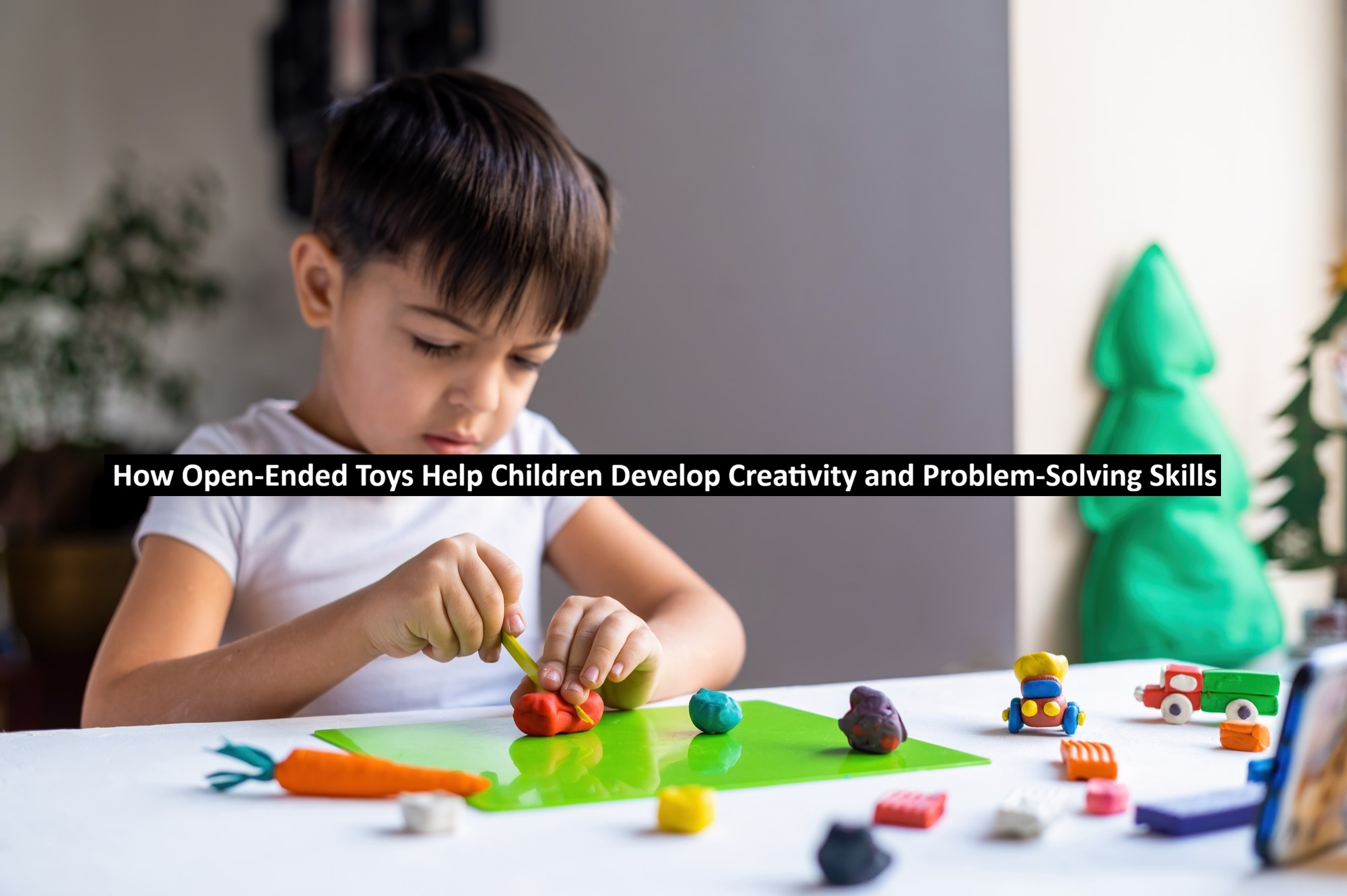
Kids love to play and explore: throw a variety of toys at a child, and they’ll likely discover a number of very different and interesting uses for them. After all, when given a set of building blocks, a child could construct a skyscraper, a rocket, or something that looks like a train that can actually run. That last example might not really be a train — that’s where the magic of open-ended play comes in.
Open-ended play lets kids take control, and in doing so, helps them express their creativity.
Along with supporting creativity, this type of play also encourages problem solving and independent thought
In this post, we’ll explore what open-ended play is, why it helps children learn and grow, and how parents can encourage more of it in their kids.
What exactly is open-ended play?
Put simply, it’s a play that doesn’t have a clearly defined end point, or a specifically defined method of achieving that end point. There might be an intended use for a toy or a set of objects, but in open-ended play, children are free to use those toys or objects however they wish.
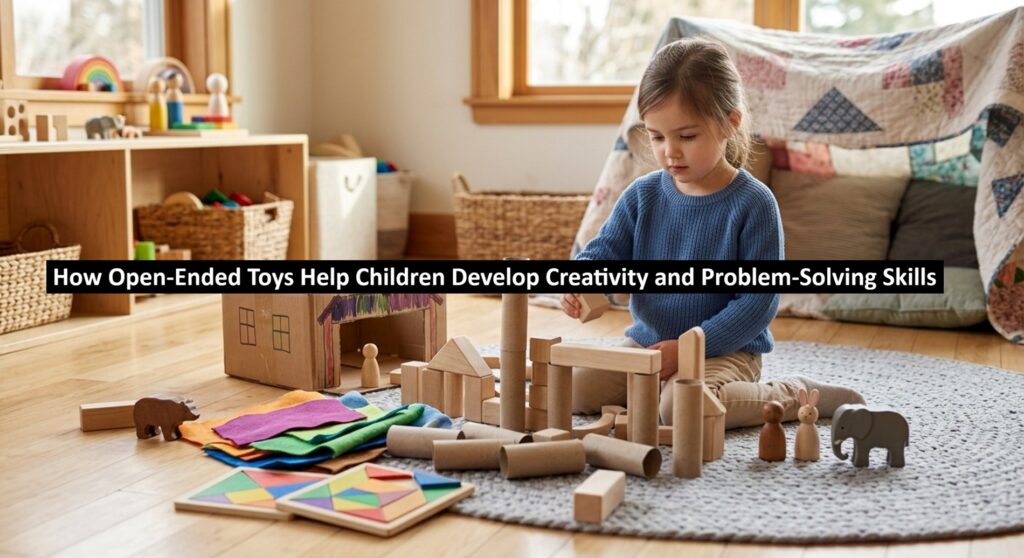
For example, a set of building blocks might be used to make a house, a tower, or the “bridge” to a cardboard castle. A collection of figurines might include animals, but the child could decide to make a zoo, a farm, or just a group of silly creatures having an adventure. It’s all about being open to the possibilities
Harvard University’s Center on the Developing Child notes that play contributes to sturdy brain architecture and the foundations of lifelong health, even though its importance is often overlooked.
Read: The Role of Data Analytics in Education Management
Open-ended play encourages kids to be creative
Children don’t always need structured play where there is just one way to achieve an end goal. By getting unstructured playtime, kids are free to experiment and think creatively.
A child’s imagination can run wild during free play. This allows them to think outside the box, and possibly — with just the right set of toys — come up with a totally unique use for an object that nobody “had intended” the toy to be used for. This gives them an outlet for their creativity that they may not have otherwise had.
Part of this means that parents — and other adults — should refrain from helping children learn what “intended” uses of toys are. Instead, of showing children how to use a particular toy, parents could ask them what they wanted to make with it
Sometimes, that’s all it takes for children to decide what they want to do with a toy and get right to playing. As for when parents aren’t sure what to do with a toy, allowing kids to lead the way is the solution
Kids can engage in problem-solving activities
Another important benefit of open-ended play is that children can make their own decisions about how to complete activities — which helps them develop their creativity during free play as described above.
They can also learn to think critically and solve problems: if something they built doesn’t hold together, if there isn’t quite as much potential in a toy as they originally thought, if something doesn’t work the way it was designed, then they’ll have to find other uses for it or rethink their project altogether
This teaches them not to settle for one answer, as there is always room for exploration; and also, that mistakes are a natural and helpful part of the learning process.
As UNICEF notes, children acquire language and learning skills, emotional regulation, and problem-solving abilities through play.
Open-ended play fosters kids’ ability to learn independently
Independent play is exactly what it sounds like: play where the child doesn’t have a parent or another adult supervising them and helping them make decisions about what they should do. Kids who get regular opportunities for independent play also develop their creativity, which is explained here .
By engaging in independent play, children don’t have to worry about what parents might expect of them. They can make their own rules and determine what they want to do
For parents who might not have the time to sit down and make a full-fledged craft with their child, this can be an appealing alternative as well: a collection of open-ended toys can help even a busy parent engage their child in meaningful playtime. The best part of open-ended independent play for parents? It doesn’t always require complicated or inaccessible materials. Some everyday objects can provide great free play experiences just as easily as specially created children’s toys!
The best part of open-ended independent play for parents? It doesn’t always require complicated or inaccessible materials. Some everyday objects can provide great free play experiences just as easily as specially created children’s toys! Harvard University’s Center on the Developing Child even offers simple, practical activities parents can use at home to turn everyday moments into brain-building play.
Open-ended play invites children to reimagine objects
Not every child wants to build castles out of Legos every time they play. Sometimes kids want to build spaceships. Or race cars. Or something completely unexpected. Open playtime gives them the chance to decide for themselves what they want to do; what they think something should be; and turn materials into whatever they wish those materials were.
A great place to start encouraging this kind of imaginative and independent free play is in the home. Parents can set up a collection of different toys and materials, and set the child loose to be creative. Building blocks, craft supplies, puzzles, figurines, and more can encourage kids to build, create, and problem-solve without being given any specific instructions
Ultimately, however, the child should be given the choice to decide what to do with these supplies. It’s okay if a child’s idea doesn’t really pan out. It’s okay if they don’t understand how something is supposed to work. It’s not the parent’s job to make everything understandable — just provide the opportunity for creativity and discovery.
By creating the space and encouraging their kids to explore open-ended play, parents can support a child’s journey through free play.
Author’s Bio:
Bilal Khan is a writer with a strong interest in parenting and child development topics. He enjoys researching how children learn, play, and grow, and writing practical content that helps parents navigate everyday parenting challenges